
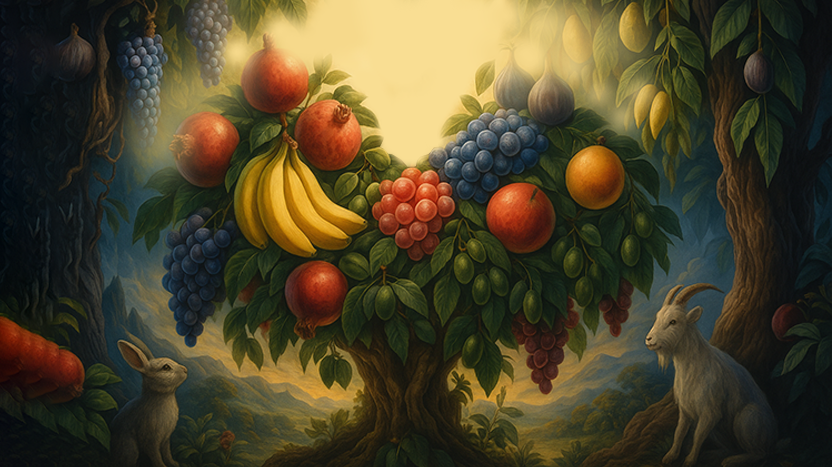
The Qur’an is remarkable not only for its spiritual guidance but also for its references to the natural world. Among the countless blessings and foods mentioned, only six fruits are named explicitly: pomegranate, banana, grape, date, fig, and olive. For thousands of years, these fruits have served not just as sustenance in Mediterranean and Middle Eastern cultures, but also as natural remedies.
Pomegranate: Symbol of Abundance and Healing
Pomegranate is one of humanity’s oldest cultivated plants and a staple of Middle Eastern and Mediterranean cuisine. Its hundreds of seeds symbolize fertility and wealth in many cultures. Historically, Persian, Egyptian, and Anatolian civilizations used pomegranate both as food and in rituals; some traditions even called it a fruit of paradise. Today, its seeds are scattered at weddings and New Year celebrations as a symbol of luck and prosperity. In traditional medicine, pomegranate peel and flowers were used to treat digestive issues like constipation and diarrhea, while its juice served as a natural antioxidant, believed to strengthen the body and heart. Modern research confirms pomegranate’s high vitamin C and polyphenol content, supporting immunity and offering anti-inflammatory benefits.
Banana: Nutritious Exotic Fruit
Bananas are sweet, soft fruits from tropical regions. Mentioned in the Qur’an as “bunches of hanging bananas” in descriptions of paradise, they symbolize abundance and prosperity. Though historically less common in the Arabian Peninsula, bananas have been regarded as exotic and luxurious. Rich in natural sugars, fiber, potassium, magnesium, and vitamins, bananas provide quick energy, aid recovery after illness, and protect the stomach lining. Modern science recognizes bananas for supporting heart rhythm, muscle, and nerve function.
Grape: Sweet Gift of the Vine
Grapes have been integral to civilizations for centuries. In the Qur’an, grapevines symbolize fertility and blessings. Grapes were consumed fresh, dried, or processed into molasses and grape juice. While wine is prohibited in Islam, grape products have always held value. Traditionally, grapes and their products were celebrated for their health benefits, offering quick energy and supporting the blood. Modern research highlights grapes’ high antioxidant content, supporting heart health and immunity.
Date: Desert’s Bountiful Treasure
Dates are perhaps the most precious fruit of desert climates. The Qur’an mentions dates more than any other fruit, often as symbols of abundance. Historically known as the “tree of life,” the date palm provided shade, sustenance, and resilience in harsh environments. Dates are rich in carbohydrates, providing rapid energy, and were praised for supporting children’s growth, bone development, and muscle strength. Dates continue to hold a special place in religious and cultural practices, including breaking the fast during Ramadan.
Fig: Ancient Source of Healing
Figs, one of the oldest cultivated plants, are regarded as “civilization fruits” from the Mediterranean to the Middle East. Mentioned in the Qur’an alongside olives (Surah At-Tin, 1-3), figs have historically symbolized abundance and wisdom. Traditional remedies use figs for digestive support, respiratory health, and joint relief. Modern studies confirm their high fiber, calcium, and antioxidant content, supporting cardiovascular health. Figs remain valued as natural healing fruits.
Olive: Blessed and Powerful Tree
The olive tree, native to the Mediterranean, is called a “blessed tree” in the Qur’an. Olives symbolize peace, longevity, and prosperity. Olive oil has been used for food, medicine, and lighting for centuries. Olive leaves have medicinal uses as teas for fever and urinary support. The fruit is rich in vitamin E, healthy fats, and antioxidants. Modern research supports olive oil’s cardiovascular benefits, anti-inflammatory, and antimicrobial properties. Olives continue to symbolize health and abundance.
Conclusion
Of hundreds of fruits mentioned in history, the Qur’an highlights only pomegranate, banana, grape, date, fig, and olive. These six fruits are extraordinary blessings, valued both for nutrition and cultural significance. Traditional medicine emphasized their protective and supportive effects, and modern science confirms many of these benefits. This continuity between historical knowledge and contemporary research invites renewed appreciation and respect for these remarkable fruits.
diger-bloglar
The Power of Micro Support for Daily Energy and Resistance: Vitamin & Mineral Supplements
h1, h2 { color: #1e293b; } h1 { font-size: 2em; margin-bottom: 0.5em; } h2 { font-size:...

Reishi Mushroom: A Thousand Years of Healing, Serving Modern Life
h1, h2 { color: #1e293b; } h1 { font-size: 2em; margin-bottom: 0.5em; } h2 { font-size:...

Immune Support with Herbal Ingredients: Powerful Components in Lozenge Form
h1, h2 { color: #1e293b; } h1 { font-size: 2em; margin-bottom: 0.5em; } h2 { font-size:...